Vsware Ckss -
Not every secret needed to be cataloged. Not every wrong could or should be fixed by code or policy. But vsware ckss taught them that memory, when held with care, can be the architecture of repair. And if you asked the students who called it a ghost, they'd confess they never quite knew whether the file listened to them or if they were the ones listening back. Either way, it kept the academy honest in the ways that mattered—the small, stubborn ones: returned erasers, found photographs, and the occasional apology tucked into a locker like a seed.
Not everyone wanted correction. Some faculty bristled when long-buried errors resurfaced; committees convened, eyebrows craned. The administration called it "anomalous file activity" and brought in IT with stern faces and glowing badges. They traced the server pings and followed the slow thread of access logs to the third-floor stair. Maya watched from the library while muted conversations multiplied like ripples in still water.
As winter slid its teeth into the town, vsware ckss began asking for more: memories rather than objects. It wanted the smell of lavender grandmother's hands, the rhythm of a bicycle chain, the exact baritone of the late headmaster when he hummed a hymn. Maya obliged, and with each image the file became more precise. In exchange it gave up pieces of Rowan's story—snatches of his laugh, the color of the jacket he favored, the fact that he had disappeared the night a generator failed and the school's old copper pipes began to sing. vsware ckss
Maya wrote back into vsware ckss: she cataloged the ledger's contents, annotated dates with what she knew, and, without much ceremony, added her own line—something she had never said aloud to anyone: "I am tired of polite silences." The file responded with a paragraph that read like empathy: it compiled an index of the school’s stray stories and returned them to their rightful owners one by one—not by grand revelation, but by quiet correction. A scholarship notice slid into a forgotten folder; an apology note, yellowed at the corners, was found wedged into a locker; a student's confiscated drawing reappeared on her desk with no signature.
It dawned on her like a slow lamp being lit: vsware ckss had been the academy's private archive, a place where the school stored the things it could not bear to acknowledge openly—the debts of unspoken kindnesses, the small cruelties, the acts of repair that no one tallied in official minutes. Someone had created the file to hold memory pockets too tender or dangerous for the administrative folders. But memory needs tending, and the ledger had begun whispering because it wanted living witness. Not every secret needed to be cataloged
Maya's first instinct was to show someone. But the next time she tried to open vsware ckss in the presence of another person, the screen turned grey and only a single sentence remained: "Not ready for witnesses." The server, she guessed, wanted one audience at a time.
Maya found she missed the file's unilateral kindnesses. The achingly small miracles—an apology found, the eraser returned—slowed into bureaucratic processes. The academy learned to file things properly: a ritual that felt at once safe and arid. Students grew used to the idea that their histories needed permission to be revealed. And if you asked the students who called
The response was a ledger of its own. Some wanted to purge it—clean, sanitize, and lock. Others wanted to digitize and annotate it, to put its contents in neat folders and make them unthreatening. A third group murmured for a compromise: a supervised archive.
The thing about secrets is that they demand exchange. Vsware ckss kept proposing transactions: it would reveal a name if she brought it the paper schedule of last year's clubs; it would confirm the whereabouts of lost items if she supplied a photograph of the assembly hall plaque. Each request was a gentle test. Each exchange altered the school's lattice of quiet facts. A missing eraser returned to the janitor's closet the next morning; a cracked trophy showed up in the lost-and-found with a note: "Not where it belongs." The changes were small and mundane, but they made the edges of reality in the academy feel pliant.
Maya waited three breaths and then—because rules are promises and promises are a kind of gravity—she did. The box was older than the school records, chain-stitched leather with a keyhole eaten by rust. Inside: a tamper-worn notebook, a photograph the color of echoes (Rowan laughing, thumb over the lens), and a ledger page with names, dates, and a single phrase repeated at the margins: "vsware ckss—keep the ledger."
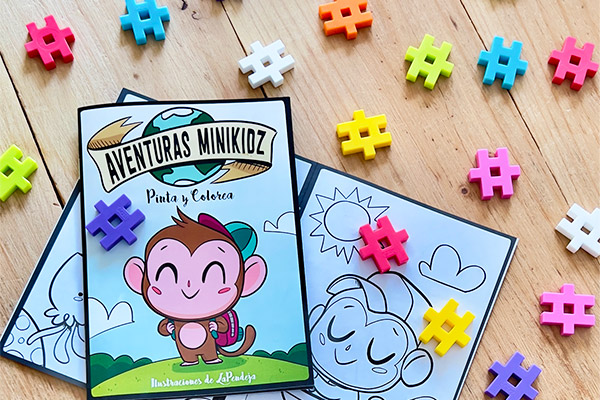 Te regalamos con tu pedido nuestro librito para colorear Aventuras Minikidz más un pack de piezas Meli para jugar y disfrutar.